
Missing a flight is the fastest way to spoil your dream holiday plans, but how early should you get to the airport to get through check-in and security stress-free?
Showing up late to the airport can cost more than just your flight, with a potential chain reaction of missed connections, nonrefundable hotel and activity costs, reshuffled itineraries, and a whole lot of stress. The best strategy is to hope for smooth check-ins and easy-to-find board gates, but plan for airport traffic, long lines, baggage issues, and any other potential delays.
When can you check in for your flight?
Most airlines open online check-in 24 hours before departure, so you can enter your passport information, pick your preferred seat, and get a digital boarding pass to bypass the check-in lines and head straight for security. If you have bags, you can pay ahead of your arrival at the airport, use the self-serve kiosks to print your luggage tags, and leave them at the expedited bag drop.
While many airlines encourage online check-in, old-school, in-person check-in is often still available for those who prefer it—check your airline's check-in procedure before heading to the airport to make sure. For example, WestJet passengers must check in online, but they can still visit the kiosk to print their boarding passes and luggage tags. Other airlines, like Flair, may charge a fee for in-person check-in.
Check-in usually closes 60 minutes before departure. If you have checked luggage, most kiosks (where available) let you print your baggage tags and drop your bags off at the counter. Give yourself plenty of time—the fewer surprises, the smoother the start.
How early should you be at the airport?
When should you get to the airport? Earlier than you think—especially when flying internationally or during peak hours.
Here’s a quick guide to the recommended airport arrival times for Canada’s major airlines:
Canadian airlines | Domestic departures | US/International departures |
|---|---|---|
WestJet | Two hours | 2.5 hours |
Air Canada | Two hours | Three hours |
Air Transat | Three hours | Three hours |
Porter | One hour | Three hours |
Flair | Two hours | Three hours |
Disclaimer: Information correct as of July 9th, 2026, obtained from Air Canada, WestJet, Air Transat, Porter, and Flair Airlines websites. Always check the latest guidance from your airline of choice before travelling.
How early should you arrive for a domestic flight?
For domestic flights in Canada, plan to arrive at the airport at least two hours before departure. Most Canadian carriers require passengers to check in online or at an airport kiosk at least 60 minutes before departure, though some allow for as little as 30 minutes. Boarding gates open 30 to 45 minutes before departure time, and they close 10 to 20 minutes before departure.
How early should you arrive for an international flight?
Plan to arrive at the airport about three hours before departure for international flights. You can sometimes push your arrival to 90 minutes before takeoff, but it's risky and usually only works during slow travel periods and only if you check in online and have only a carry-on. If you're concerned about navigating an unfamiliar airport, getting through traffic, dropping off oversized bags, or other potential complications, arrive up to four hours early.
How early should you arrive for a flight if you have checked bags?
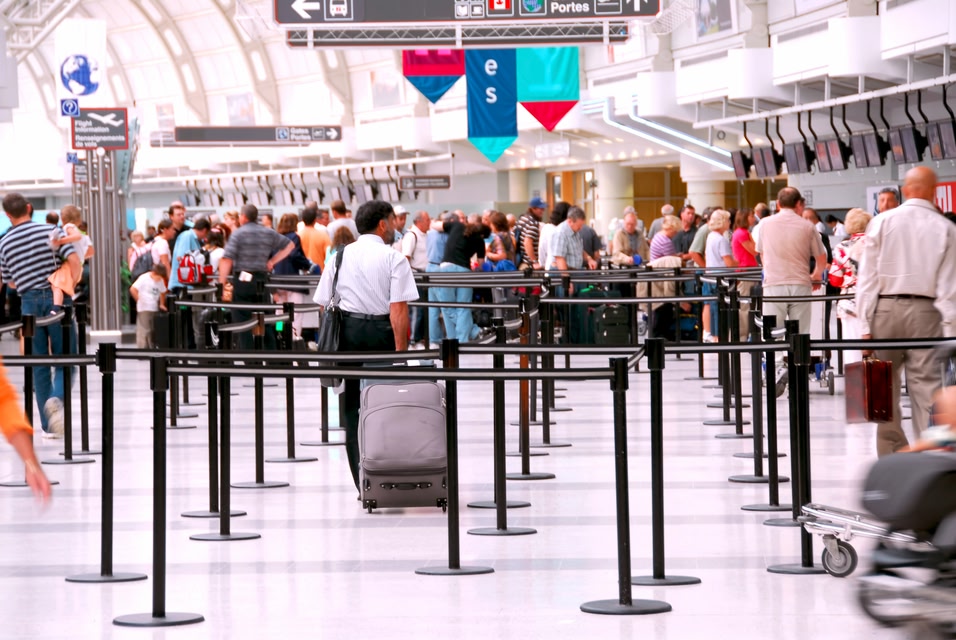
Travelling light and without a checked bag means you can head straight to security and skip the check-in desk. But, if you are travelling with luggage to drop off, budget for extra time to get through the baggage check-in, especially during busy travel seasons. Don't forget to factor in customs if you're flying internationally.
Even with online check-in, you’ll still need to print a luggage tag at the airport before heading to the bag drop. Air Canada opens bag drop four hours before departure for domestic, US, and international flights and closes check-in and bag drop 60 minutes before takeoff. WestJet accepts checked bags up to three hours before departure at most locations, with cut-off times at 45 minutes for domestic flights and one hour for US and international routes.
Bottom line? If you’ve got bags to check, don’t cut it close.
What are the latest baggage drop-off times?
Check-in and bag drop deadlines are strict, and missing them could mean missing your flight. Here’s what you need to know:
WestJet and Air Transat close check-in and bag drop 45 minutes before departure for domestic flights and 60 minutes for international.
Air Canada has a 60-minute cut-off across the board, whether you’re flying within Canada or abroad.
Porter Airlines varies by airport, but the cut-off can be as early as 90 minutes before departure, so double-check your airport's guidelines.
Check that your carry-on meets your airline’s size and weight limits before you get to security, since allowances vary between airlines. Agents may ask you to check it at the gate if your bag is too big, and last-minute baggage fees are the highest.
When should I arrive at the boarding gate?
Boarding gate times are strict directions, not suggestions. Cutting it too close could leave you waving at your plane from the terminal.
WestJet recommends getting to the gate at least 40 minutes before departure. If you show up less than 10 minutes before, you won’t be allowed to board—no exceptions. Air Canada has a tighter boarding window, and most gates close 15 minutes before departure. They advise arriving 30 minutes early for domestic and US flights and 45 minutes ahead for international departures.
Always check your airline’s exact gate times, and aim to be early. A calm walk to your seat beats a sprint through duty-free any day.
Arrive on time and ready for your trip
There are a few factors that determine how early or late you can arrive at the airport and still make your flight, but it's best to plan to arrive early. If you have time to spare, you can always pick up a few snacks and reading material for the flight, browse the airport shops, or check your boarding gate early for peace of mind.
Frequently asked questions: How early should I arrive at the airport?
Skyscanner can help you find the best flight, hotel, and car rental deals for your next trip.


