Spanning about 1,200km across Toronto, the Toronto Transit Commission (AKA the TTC) is one of the best ways to get around the city, whether as a tourist or a resident.
The TTC is Toronto's main public transit agency, and its massive network of buses, subway trains, light rail, and streetcar routes throughout the city makes it easy to explore the city without ever worrying about parking. If you're heading to Toronto soon, use this Toronto Transit Commission trip planner to learn the basics of the city's public transit system so you can ride the TTC like a local.
About the TTC
The TTC is Toronto's primary public transit system, and its network operates most of the city's bus and rail routes. Established in 1921, it's also one of the oldest and largest public transit systems in Canada. It gets plenty of traffic from residents and tourists—its annual ridership usually exceeds 800 million, averaging 2.5 million per day.
The TTC serves every Toronto neighbourhood with an interconnected grid of buses, streetcars, subways, and light rail. It uses a single-fare system, so you can switch seamlessly between its vehicle types and routes, from Toronto Pearson Airport to the waterfront and downtown core.
Some routes even extend outside Toronto to hubs like Vaughan and Mississauga, and you can also connect to other regional and intercity transit services, including GO Transit, MiWay, and the UP Express to Toronto Pearson Airport.

TTC trip planner: Subway lines guide
Find details about Toronto's TTC subway lines and specific stations on the Toronto transit map.
Yonge-University
The Yonge-University Line is Toronto's busiest subway line. Shaped loosely like the letter U, it's the only subway line that connects with each of the other lines. The Yonge-University Line offers access to many of the city's most popular attractions, including:
CN Tower
Ripley's Aquarium of Canada
Hockey Hall of Fame
Eaton Centre
Royal Ontario Museum
Yorkdale Shopping Centre
From Union Station, the western branch travels north through the Financial District, the Entertainment District, the University of Toronto, Yorkdale, York University, and Vaughan Metropolitan Centre. The eastern branch follows Yonge Street through downtown and Midtown Toronto before ending at Finch Station. Multiple stops connect to regional transit systems.
Bloor-Danforth
The Bloor-Danforth subway line travels east-west across Toronto, through the downtown core, and into some of the city's most popular neighbourhoods at either end. Ride this line to visit High Park, Toronto's largest public park, featuring hiking trails, gardens, and Grenadier Pond, or Greektown along Danforth Avenue, known for Greek restaurants and summer street festivals
This line runs from Kipling Station in Etobicoke to Kennedy Station in Scarborough, following the Bloor and Danforth corridors. It intersects with the Yonge-University Line at St. George and Bloor-Yonge, connects with the Eglinton Line at Kennedy, and links to the 900 Airport Express at Kipling Station for service to Toronto Pearson Airport.
Sheppard line
The Sheppard line is a short route serving North York along Sheppard Avenue between Sheppard-Yonge and Don Mills stations, providing convenient access to major shopping and business districts. Use this line to reach CF Fairview Mall, a large indoor shopping centre beside Don Mills Station, or Bayview Village Shopping Centre, an upscale mall near Bayview Station.
Eglinton line
The Eglinton line runs across midtown Toronto between Mount Dennis and Kennedy, providing a fast east-west route north of downtown. It connects several major transit hubs—Mount Dennis connects with UP Express for Toronto Pearson International Airport and Union Station, while Kennedy connects with GO Transit and the Bloor-Danforth Line. Stop at Aga Khan Park & Museum Station for direct access to the Aga Khan Museum and surrounding gardens, or explore Little Jamaica around Oakwood Station.
Finch West line
The Finch West line serves northwest Toronto between Finch West Station and Humber Polytechnic, connecting York University, Humber Polytechnic, and several communities along Finch Avenue West. Finch West Station connects with the Yonge-University line, while Humber Polytechnic connects to TTC bus routes and Brampton Transit services.
How to get to downtown Toronto from the airport on the TTC
900 Airport Express
The 900 Airport Express is the TTC's main airport route. It connects Toronto Pearson Airport with Kipling Station on the Bloor-Danforth subway line in about 20 to 25 minutes. From Kipling, continue east by subway toward downtown Toronto.
Pearson to Yonge-University
The 52A Lawrence West bus runs from the airport to the Yonge-University line at Lawrence Station. Travel time is approximately 50 to 75 minutes. The 925 Lawrence West Bus also operates during peak periods.
Overnight TTC service
Several routes operate overnight services:
300A Bloor-Danforth: Pearson Airport along Danforth Avenue and Bloor Street
334A Eglinton: Pearson Airport to Kennedy Station
352 Lawrence West: Pearson Airport to Sunnybrook Hospital
UP Express
UP Express is the fastest and most convenient way to travel between Pearson Airport and downtown Toronto. Trains run every 15 minutes and reach Union Station in about 28 minutes, with stops at Weston, Mount Dennis, and Bloor along the way. A one-way trip costs $12.35. Children under 12 years of age ride for free.
What are the TTC hours of operation?
The TTC has varying hours of operation, depending on the route, with some services operating 24-7. Most routes also have different schedules on weekdays, Saturdays, Sundays, and holidays. Schedules also change on specific dates throughout the year to accommodate changes in anticipated ridership.
TTC subway hours
The TTC subway stations and routes operate from the early morning until late into the evening, with buses substituting in for certain routes for overnight service.
Route | Mon–Fri | Saturday | Sunday |
|---|---|---|---|
05:35–02:40 | 05:40–02:20 | 07:55–02:20 | |
05:35–02:40 | 05:40–02:20 | 07:25–02:20 | |
05:25–02:35 | 05:45–02:35 | 07:55–02:35 | |
04:50–02:25 | 05:55–02:25 | 05:50–02:25 | |
05:25–02:30 | 05:25–02:25 | 08:10–02:25 |
Times represent the approximate service span for each route as of May 22, 2026. Actual first and last train times vary by station and direction.
TTC bus and streetcar hours
The TTC bus and streetcar routes operate from approximately 06:00 to 01:00 Monday through Saturday and from 08:00 to 01:00 on Sundays. The TTC also offers the 10-minute-or-better network, which means that a route has one or more branches that operate at a 10-minute frequency or better during regular hours.
Route type | Regular schedule | Service frequency |
|---|---|---|
Regular service | 06:00–01:00 weekdays; 08:00–01:00 Sundays | Many branches offer 10-minutes or better |
Blue Night Network | 01:00–06:00 weekdays; 01:00–08:00 Sundays | 30 minutes or better, depending on the route |
Express Network | 06:00–01:00; some routes only offer rush hour/peak period service | Varying; routes 900 and 927 are part of the 10-minute network |
Limited service | Route-dependent; may only run on specific days | Route-dependent |
Community Bus | Monday to Friday service | Varying |
Seasonal | Operates at limited times of the year; schedules are specific to each route. | Varying |
The TTC fare system: How to pay for your trip
How much does the TTC cost to ride?
A standard adult TTC fare is $3.30. That fare includes unlimited travel on the entire TTC network for two hours from the time of your first tap, so transfers and quick stopovers are covered within that window.
Fare type | Cost (CAD) |
|---|---|
Adult (PRESTO, debit, credit) | $3.30–$3.35 |
PRESTO two-ride ticket | $6.70 |
PRESTO day pass | $13.50 |
Youth (13–19) PRESTO | $2.35–$2.40 |
Senior (65+) PRESTO | $2.25–$2.30 |
Children 12 and under | Free |
If you're paying with cash, the fare is an extra five cents and is not eligible for the automatic two-hour transfer. Cash-paying bus and streetcar customers must get a paper transfer from the transit operator or the streetcar Fares and Transfer Machines. If you're riding on the subway, get your paper transfer from the red Transfers machine at the station. Paper transfers are only valid for the TTC network.
How can you pay for fares on the TTC?
The TTC accepts payment by credit, debit, or PRESTO card. The TTC also accepts credit or debit payments from mobile wallets, including Apple Pay and Google Wallet.
Contactless debit, credit, and mobile wallet payments charge the standard adult fare and include the TTC’s two-hour transfer window, as long as you use the same card or device throughout your trip. Keep your paper transfer, PRESTO Ticket, or tapped payment method handy as proof of payment.
To pay your fare and get your proof of payment:
Subway and LRT stations: Pay at the fare gates before entering the paid area by tapping a PRESTO card, credit card, debit card, phone, or smartwatch, or by using a PRESTO Ticket purchased from a fare vending machine.
Buses: Pay when you board through the front door by tapping a PRESTO card, credit card, debit card, phone, or smartwatch, using a PRESTO Ticket, or paying cash into the farebox.
Streetcars: Board through any door and pay onboard by tapping a PRESTO card, credit card, debit card, phone, or smartwatch, using a PRESTO Ticket, or paying cash at the fare and transfer machine.
Transfers: Use the same card throughout your trip so the TTC can recognize your transfer and apply the two-hour transfer window without charging you. If you pay cash, keep your paper transfer accessible.
What is a PRESTO card?
A PRESTO card is a reloadable transit card that lets you pay fares on the TTC and most public transit systems across the Greater Toronto and Hamilton Area. Load money onto the card, and use it for seamless transfers between participating transit agencies. You can purchase a physical card or add PRESTO to your Apple Wallet or Google Wallet and manage your balance through the PRESTO app or website.
Ontario One Pass Program: Switching from the TTC to other systems
If you plan to travel beyond Toronto, take advantage of Ontario's One Fare Program. The program allows eligible riders to transfer using one fare (excluding cash fares) between the TTC and participating transit systems, including:
GO Transit
MiWay
York Region Transit
Brampton Transit
Durham Region Transit
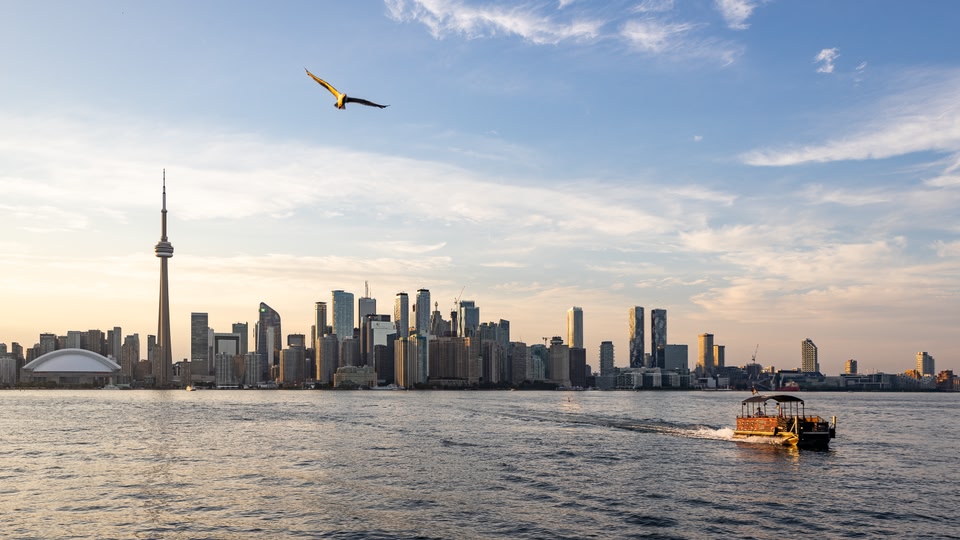
Ride the TTC like a local on your next trip to Toronto
Now that you're ready to save cash, time, and parking frustration with this TTC trip planner guide, all that’s left to do is map out what to see and do while you’re in Toronto. Get more travel inspiration for Toronto and the rest of Ontario:
Frequently asked questions: TTC Toronto trip planner
Skyscanner can help you find the best flight, hotel, and car rental deals for your next trip.


