Even as countries around the world relax border restrictions for leisure travellers, we don’t all feel as though we have enough information to confidently make plans to travel during the COVID pandemic. Here at Skyscanner, we aim to change that with a new webinar series that will equip our community with the most up-to-date news and facts straight from experts from across the industry.
Our first webinar, Travel Confident: insider perspectives on today’s travel experience, was chock-full of interesting insights from these expert panelists:
- Tom Hall, Contributor at Lonely Planet
- Uwern Jong, Editor-in-Chief at OutThere magazine
- Michael Levie, Chief Operating Officer at CitizenM
- Pete Burns, Director of Marketing & Digital at Heathrow
- Jess Castillian, Marketing Manager at Skyscanner
- Martin Nolan, webinar MC and Senior Director at Skyscanner
We’re going to give you a full recap of the webinar, but if you want to jump around to specific sections, here are the main topics that were covered:
- Travel planning considerations in a post-COVID world
- What to expect when arriving at your destination
- The next travel trends will be…
- Community Q&A – including booking through online travel agencies and physical distancing at airports
Travel Confident
Watch the full webinar now:
Planning considerations for travel during COVID
Although the pandemic has shaken confidence in travel, one thing is certain: there’s still an appetite to get away and explore new destinations. Airlines, hotels, and destinations all recognize this. And they are all heightening their health and safety standards to attract visitors and ensure they feel comfortable during their experience.
Travellers have a responsibility to be informed before leaving on any trip and to act as good guests when we arrive. Always research what the new measures are at your destination. During your trip, do everything to protect yourself and others.
Pete Burns, Director of Marketing & Digital at Heathrow, recommends starting your trip planning by thinking about the different stages of your journey. Check what has changed at your departure and arrival airports. See what the new regulations are for the country you’ll be visiting. Do you need to present a negative PCR test upon arrival? Are tests available at the airport?
Where to travel during COVID
Although you may be quick to dismiss visiting top tourist destinations, like Rome, or those that are known to be more expensive, like Norway, now is actually a great time to go. Uwern Jong, Editor-in-Chief at OutThere magazine, says that these typically crowded destinations “are quieter at this time of year, and culturalists among us can enjoy these places away from the usual crowds. Flights are more affordable than ever before and hoteliers are discounting as an incentive to returning guests. Even the best restaurants are doing great deals to get foodies back.”
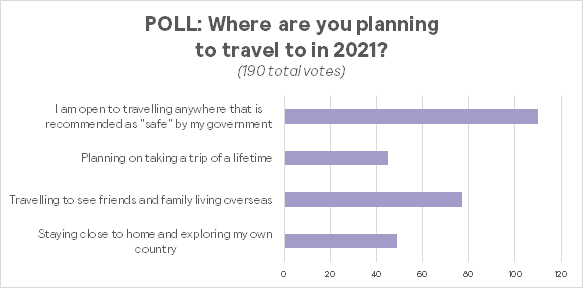
Searching for flights and accommodations
Between discounts and generous change policies from airlines and hotels around the world, there’s far more flexibility around making travel arrangements than ever before.
Jong recommends thoroughly reviewing the companies you want to book with before committing. Read reviews, check for flexible refund and change policies, and see how easy they make it to interact with customer service.
Castillian explained how Skyscanner’s new airline safety rating feature can help with this research. “Travellers have the option to search for and choose an airline based on that safety rating,” she says. “What makes up those ratings is what health and safety measures are being taken by the airline.”
When searching for accommodations on Skyscanner, travellers can filter for hotels that have a high cleanliness score and a free cancellation policy, which is based on ratings by fellow travellers.
What to expect when arriving at your destination
The panelists emphasized this idea of an unspoken but agreed-upon contract between travellers and the travel industry. As a traveller, you’re undoubtedly putting yourself at risk. You need assurance from the industry that every piece of the travel pie is operating with safety in mind. At the same time, travellers have a responsibility to go the extra mile to be good guests. “It’s a two-way street,” says Michael Levie, Chief Operating Officer at CitizenM. Follow the protocols in place, like wearing a mask in public spaces and staying at least two metres away from others when possible.
Levie also indicated the ways travellers can check whether hotels are taking cleanliness seriously:
- Hotels should provide clear, new house rules
- Touchless options, such as for check-in, should be implemented when possible
- Breakfast and hotel restaurant meals should be available for room delivery
- Housekeeping should be at the request of the guest to limit the number of people entering each room
He did note that the hotel industry isn’t known for offering the most advanced technology to its guests. Some simply cannot afford it, and new technology also takes time to implement and get right. Still, all hotels should have updated policies to keep guests safe and provide a positive experience.
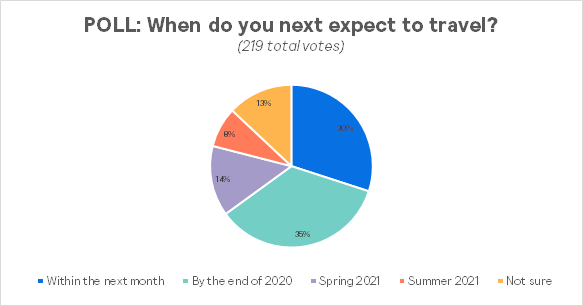
The next travel trends will be…
Tom Hall, contributor at Lonely Planet, says that most people who are able to travel probably won’t take the longer trips they used to enjoy. “I think the key word is short,” he says. “Probably short haul, short-term planning, and maybe even short trips.”
Jong predicts the opposite for those who have fewer physical ties and are able to be away longer. He thinks nomadic travel will become more popular, with trips lasting weeks or months.
Burns says that at the airport the industry is moving toward more standardized testing “to get us out of this kind of quarantine roulette we’re in.” (We love that very true quote.) He says that at Heathrow Airport, they’re currently lobbying the government to implement testing standards in airports worldwide, similar to when you go through security or board an airplane.
There was agreement across panelists that digital will change travel. We’re going to see continued efforts to digitize the travel experience and make it as touchless as possible from start to finish. A greater emphasis will also be placed on ethical and sustainable travel.
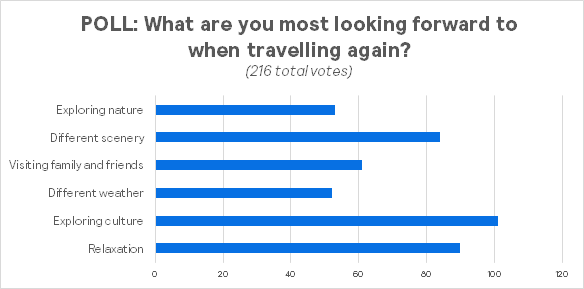
Community Q&A
Are hostels safe to stay in?
Many hostels have reduced the number of people who can stay in dorm areas and implemented new cleaning procedures for rooms and common areas. Ask the hostel if rooms have direct air refresh, which takes air from outside instead of recycling indoor air.
Yes, it’ll be a different hostel experience than you’re used to, but the entire travel experience is different nowadays anyway.
What are the positive outcomes from the COVID crisis on the travel industry?
The pandemic has accelerated improvements in the customer experience, from more digital services to a better aircraft boarding experience. It has also shown travellers just how much care goes into the travel experience every step of the way. Many people have a greater respect and appreciation of what travel providers do.
Is physical distancing possible on planes and airports?
Physical distancing is not always possible on a trip, like on a full flight. But that’s when face masks come into play in order to significantly reduce the risk of virus infection for yourself and for the ones around you. There are safety precautions during each step of your flight from departure to arrival. In places where it is practical, seats are blocked and signs encourage physical distancing. This includes the check-in area, departures lounge, and large terminal spaces.
Should you book through an online travel agent?
The advantage of booking through online travel agents (OTAs) is that they offer competitive pricing. When it comes to refunds, the process will take longer than booking directly with an airline or hotel. This is because refunds are first issued to OTAs, and then the OTA issues the refund to the customer. When you’re searching for flights on Skyscanner, you can filter by flexible policies for both airlines and OTAs.
Final takeaway
The pandemic has undeniably had a huge impact on travel. We have a greater responsibility to be good global citizens when we’re on the road. “Think about how we can make it safe for everyone so travel can continue,” Jong says.
Do your homework on your destination and the companies whose services you’ll use. Just because a new policy isn’t mentioned online doesn’t mean it doesn’t exist. If need be, call a hotel, restaurant, or tourist attraction to find out exactly how they’re making guests safe and what your responsibility is to others during your visit. It’s a new world of travel, but we’re all in this together.
Want to read more?
- Coronavirus travel advice: our regularly updated post on local and international travel during COVID and new airline policies.
- Full recap of Skyscanner’s Travel With Pride event: Roxanne and Maartje of Once Upon a Journey spoke at Travel With Pride — a webinar that examined the intersection of travel and the LGBTQ+ and ally experience.
- Unexpected destinations to add to your future travel list: 9 extraordinary places to visit when you can rediscover to the world of travel.