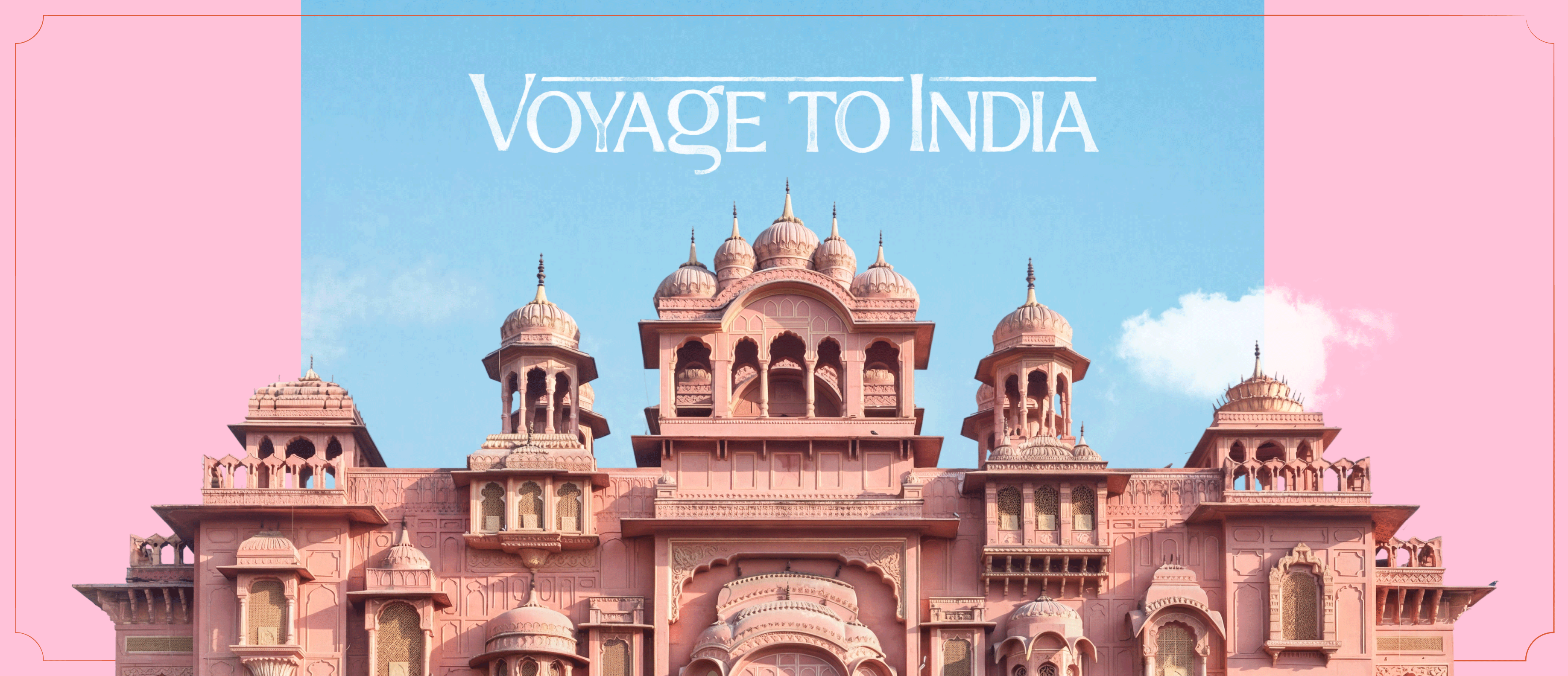

Hi! We’re Accidentally Wes Anderson 👋
What began as a personal travel bucket list back in 2017 has blossomed into a lively community of nearly two million adventurers from across the globe. As lovers of travel, design and the unexpected, we explore off-the-beaten-path, real-world wonders that seem plucked from the vibrant world of Wes Anderson.
Last year we took you through Italy, and now we're back to bring you on an incredible journey through Indian marble and pink sandstone. Welcome to Jaipur and Agra – two cities where every corner seems designed to make you do a double-take. Together, we'll uncover the people, places, and stories behind these historic cities, plus a few stops worth adding to your itinerary.

From Agra to the Pink City: Hidden gems and grand palaces
We’ve all heard of the Taj Mahal. Well, there’s also Hawa Mahal in Jaipur and many other famous mahals in between. But the real magic of Agra and Jaipur is found in the spaces between the postcards – down the quiet gallis, behind carved doorways, and on rooftops where you’ll more likely find the best views.
So we’re exploring these storied cities the only way we know how: following the detours for a more unique itinerary. Consider this your loosely plotted route through stepwells, kite markets, hidden courtyards, and a few well-timed stops for chai and samosas along the way. Chalo!
Most international travelers will arrive via New Delhi, a 55-minute flight or 4-hour+ drive from Jaipur.
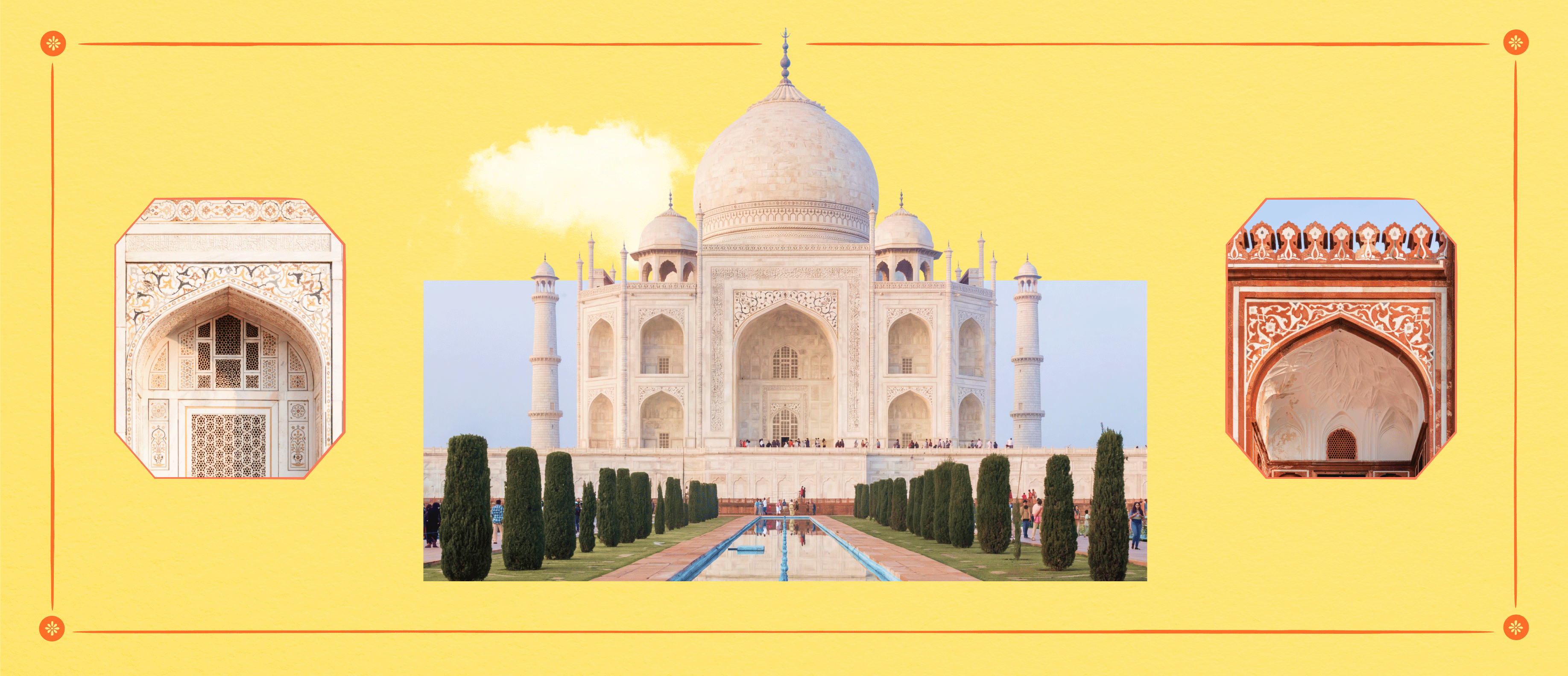
The Seventh Wonder, from an unexpected angle
While the iconic front facade of the Taj Mahal is etched in most minds, seeing only one side of this masterpiece misses half the story. So instead, hop in a 10-minute tuk-tuk ride to Mehtab Bagh (AKA the “Moonlight Garden”, where you can witness the Taj rising beyond quiet greenery while monkeys and birds wander the grounds). Plus, you’ll miss the crowds too.
Entry is a fraction of the cost (₹200 versus ₹1300+ for the Taj itself) and on the ride over, keep an eye out for local kids playing cricket with the monument as their backdrop. But for our favorite vantage point, follow the path down to the riverbank...

One man, one boat
Behind the Taj Mahal, keep your eyes peeled for a man named Manoj and his small wooden watercraft. For over 30 years, Manoj has ferried visitors two-by-two across the Yamuna River for a unique view of the Taj reflected in the water. Though boat rides here were banned by the government a few years ago, Manoj was somehow grandfathered in. The only catch? You have to know how to find him…
Agra insights

En route to the Pink City: A 1,000-year-old detour
Once you’ve finished your time in Agra, the easiest path to Jaipur is a five-hour drive by private taxi, which are easy to arrange and relatively affordable. Just be sure to tell your driver you’ll want to make a pitstop along the way. Halfway into the trip the village of Abhaneri reveals one of India’s most hypnotic architectural feats: Chand Baori – a marvel ranked among the world’s deepest stepwells. More than 3,500 steps cascade in geometric criss-cross patterns 13 stories into the earth. Built in the 8th century, it served as both a well and a gathering place in Rajasthan’s punishing desert, as the air stays 5-6°C cooler than above. Pilgrims quenched their thirst after long journeys and locals descended the dizzying staircases year-round for water. So stop by, stretch your legs and experience the depths yourself.
Where to stay in Jaipur
Once you arrive in the Pink City, the places to lay your head run the gamut from century-old havelis to brand new boutique hotels and grand palaces royalty once called home.
Stay in the city center for buzzing bazaars and walkable icons (Hawa Mahal, City Palace), or venture beyond for tranquil escapes with landmarks still in reach.

Abode Jaipur
A 300-year-old pink stucco structure sits tucked in Kishanpole Bazaar between an old mahal and a wholesale bangle store. It’s easy to miss if you're not paying attention, but inside you'll find bright interiors far removed from the never-ending hum of market life just outside. You're in the literal heart of the city with iconic landmarks all within walking distance.

The Leela Palace Jaipur
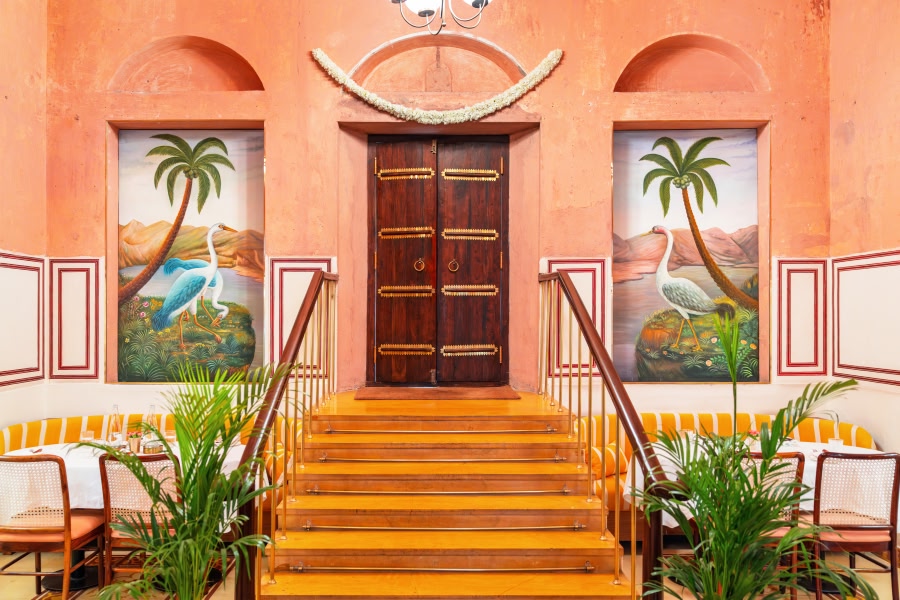
Less than 30 minutes outside the city center, the Leela Palace Jaipur's gleaming white facades and intricate jaalis sit against the Aravalli mountain. Amer Fort and the remarkable Anohki Museum of Hand Printing are around the corner and, depending which route your driver takes, you may find yourself dodging elephants in the street! The true showstopper, however, sits on site: Mohan Mahal, a restaurant crafted by the same family of artisans who built the Sheesh Mahal at Amer Fort four centuries ago. More than 350,000 pieces of traditional Thikri mirrorwork were installed over three years and the entire space is lit only by candlelight. Eat here for a meal that feels suspended in time.

Rambagh Palace
Arrive amidst a shower of flower petals at one of the city's grandest palace hotels. Built in 1835 as a home for a handmaiden to the queen of Jaipur, it evolved over the decades from garden retreat to royal residence, eventually becoming the principal home of the last ruling Maharaja. Today, visitors receive a truly regal welcome before spotting peacocks wandering the sprawling Mughal gardens and marble corridors. It’s a chance to live like Jaipur royalty. Well, at least until checkout.

Dera Mandawa
A 125-year-old haveli with just nine suites, this is a rare stay that truly feels like home. Family-run for more than a century, Thakur Jait Singh Ji and his wife, Thakurani Usha Kumari, welcome guests into the estate that's been in their family for generations. Hear stories, discover the art of kite-making (foreshadowing!) and try your hand at traditional cooking. Ask nicely and Thakur may take you for a spin in his antique Hindustan Ambassador. This is the kind of place where history doesn't sit behind velvet ropes; it lovingly pours your morning chai.

A high-flying pastime
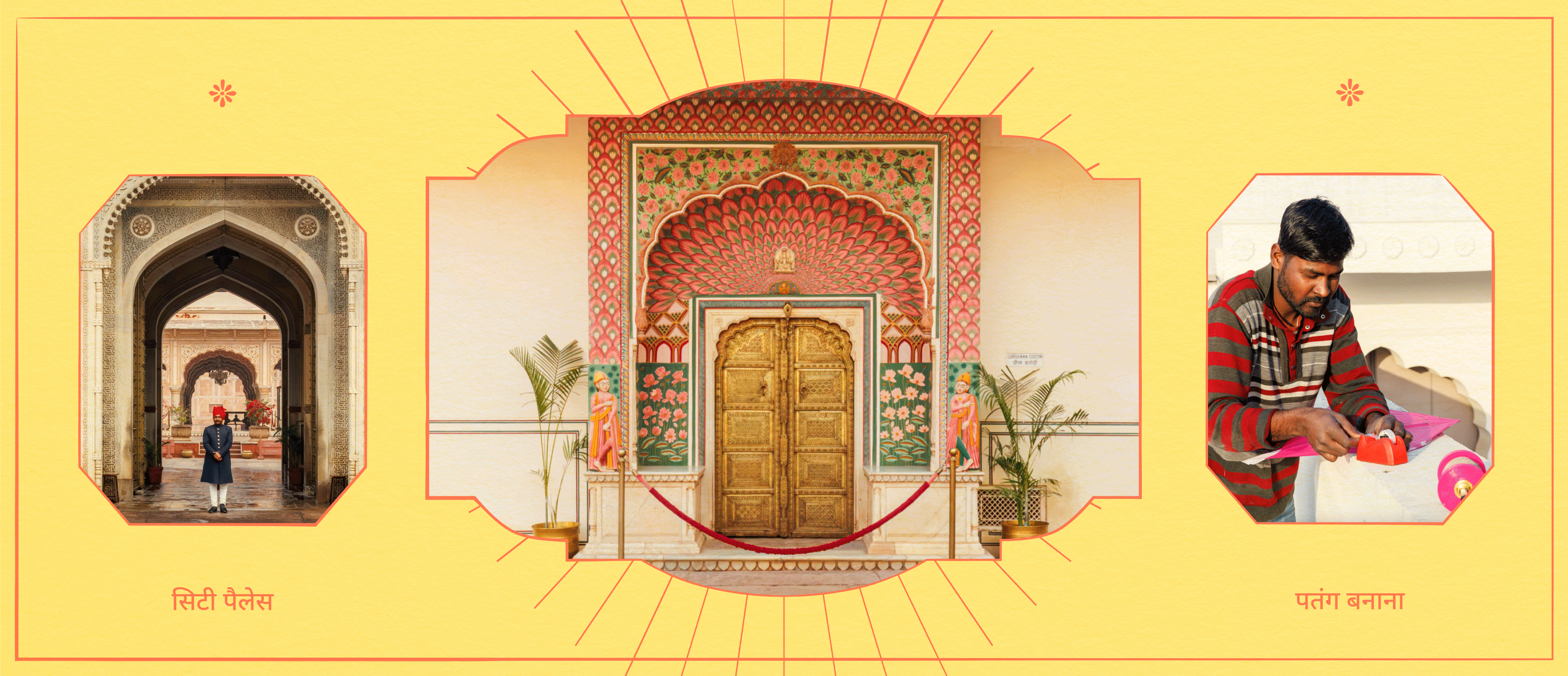
One thing you must do in Jaipur? Look up! Jaipur's skies are thick with kites – thousands of them tangled in friendly aerial combat above every rooftop. Maharaja Sawai Ram Singh introduced kite flying in the mid-1800s and the city never looked down.
Come January's Makar Sankranti festival, nearly the entire population takes to the roofs armed with spools of string, bamboo frames, paper sails, and flour paste, attempting to fly the highest while severing their neighbors' kites from the sky. It's part sport, part art, part citywide obsession. Want to learn the craft yourself? Book a kite-making class at Dera Mandawa. Though fair warning: once you've started, you may never stop searching for the perfect breeze!

Not your average cinemas
In a city built on multigenerational businesses, Jaipur's cinemas prove family legacies play just as well on the big screen. Gem Cinema opened in 1964 as Rajasthan's first 70mm theater – a palace for Hollywood imports where royalty and socialites once gathered for James Bond marathons. Today, it's run by the founder's grandson, Sudhir, who has kept the projector humming through the multiplex invasion with the same staff since its inception. In the mood for the full Bollywood experience? Head to Raj Mandir, running since 1976 and with nine stars on its facade; a wink to the owners' jewelry empire. Inside, audiences clap, whistle, and cheer at star entrances, and sometimes depart from their lush emerald green seats to dance in the aisles. Proof the best performances don't always happen onscreen.

The sacred and the streetwise
Don't be alarmed when you see cows ambling through traffic. They're not lost, they're locals! In Hindu tradition, cows are revered as symbols of generosity and life, but the reverence is practical as well: dairy, dung for fuel and fertilizer, and centuries of agricultural labor have long made the animal central to daily life. Today, the cow remains one of India's most relaxed residents – spiritually sacred, economically essential, and blessed with the ultimate right-of-way.

Block party
Inside a restored haveli at the base of Amber Fort, you'll find the Anokhi Museum of Hand Printing. The Singh family brought this ruined mansion back to life to conserve the ancient art of hand block printing. The real draw isn't just the collection itself, but the on-site artisan demonstrations where experienced printers transform plain cloth into intricate patterns using century-old techniques. Best of all? You can have a go at the blocks yourself. Turns out some traditions are better learned by doing (especially when the souvenir is something you actually made!).
Jaipur tips & tricks
Final FAQ


