At first glance, the journey up Castle Hill looks intimidating, which is why most people decide to take the funicular up. There’s no disputing the convenience of this quick ride, and the 15-minute hike up to Buda Castle isn’t that difficult. Alternatively, you could take the metro to Szell Kalman ter station or bus 16 to get to the top.

Once you reach the summit, you might not know where to look. Turn around and you’ll get an epic view of the city, and right in front of you is Buda Castle. The castle was originally built as the Royal Palace, but now it houses the National Gallery, National Library, and the Budapest History Museum.
Before you start rushing into one of the attractions, take the time to admire the outside of the castle. The Lion’s Courtyard has four stone lions that stand guard; the Hunyadi Garden used to be a bustling market, while the Savoyai Terrace is where the above mentioned epic views can be found.
If you want to learn about the history of the city, then head straight for the Budapest History Museum. Not many artifacts are on display, but the museum does an excellent presenting the history of the castle considering it was destroyed and rebuilt multiple times – the bottom floors even have some restored rooms.
Click the image below to find hotels in Budapest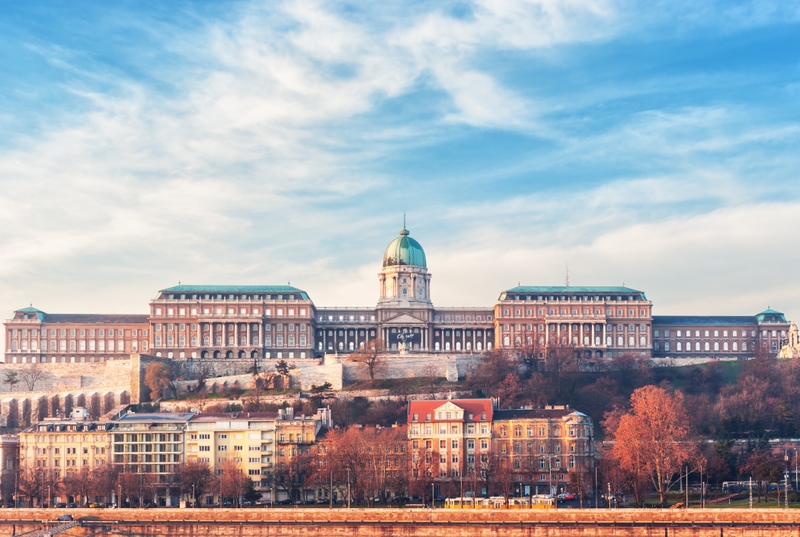
Art lovers may be more interested in the National Gallery. The gallery was established in 1957 and has a vast collection of paintings by Hungarian artists, and you’ll also find sculptures and works by other European artists. If you plan on taking pictures, you’ll need to purchase a photo permit at the admission booth. Note that this museum is relatively small and can be finished in about 2 hours.
Since Castle Hill is mainly a tourist area, dining options are either high-end or tourist traps. One restaurant that’s worth seeking out is Fortuna Onkisszolgalo Etterem – they serve traditional local meals at a reasonable pric, which is rare up on the hill. You’ll also want to save room for a slice of cake at Ruszwurm Cukrászda, one of Budapest’s oldest coffee shops.
If you stopped to eat at either above restaurants, you would have walked past Matthias Church and Fisherman’s Bastion, so it’s time to backtrack. If you plan on entering Matthias Church (you should), you’ll need to buy tickets, but don’t purchase tickets for the Bastion since the majority of it is free.
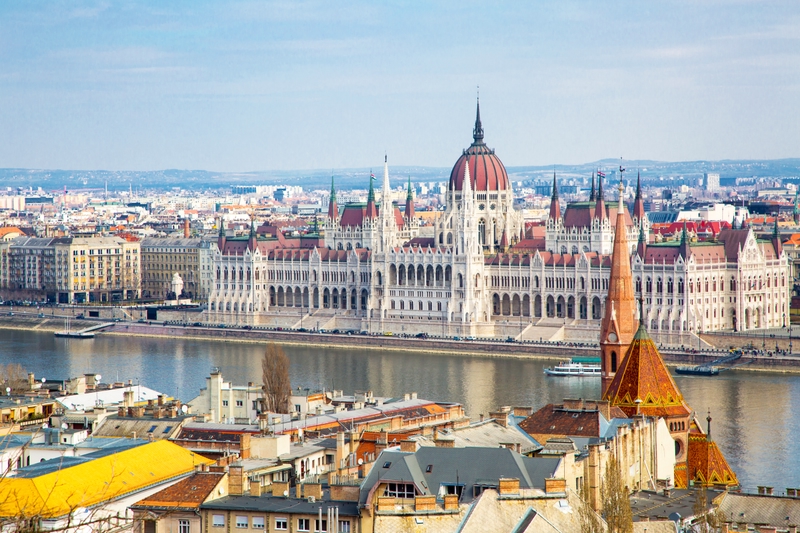
Constructed between 1895 and 1902, Fisherman’s Bastion is not nearly as old as some people assume it is. The neo-Gothic structure is composed of seven towers which symbolize the 7 Magyar tribe leaders who settled at the Carpathian Basin in the late 9th season. Visitors will likely be more interested in the stunning architecture and views of the Parliament building.

Although neighbouring Matthias Church is also a neo-Gothic structure, the bright tiles of the roof are a nice contrast. The inside of the church, the art deco style is stunning wherever you stand, but be sure to make your way upstairs for a better vantage point. Downstairs in the crypt is a replica of the Crown of St. Stephen, but if you’ve booked a trip to the parliament building, you can see the real thing there.
For a little bit more of a history lesson, keep heading north until you come across the remains of the Church of Mary Magdalene. The church was mostly destroyed during World War II, but the tower still stands. What makes this church particularly interesting is that it was the only church allowed to remain Christian during the Turkish rule.
You would have covered most of the sites of Castle Hill by now, so if you still have the energy, head back down and over the Danube River to get to Pest. The city has more than enough attractions to keep you entertained and a nightlife that might keep you up until sunrise.
Click the image below to find cheap flights to Budapest